As the return of the concept-testing of the rural cyberspace and analytics platform (now COMP@SS Analytics) nears, here are major highlights of the first one and a half years, and the future outlook for the next one year.
In the first one and a half years, critical progress was made by coming up with a clear explanation on what generally challenges the adoption of digital solutions, as well as most productivity and sustainability innovations. It was an exciting and rewarding moment to obtain the evidence that low adoption rates of innovations in Malawi are mainly a result of the incompatibility of their user experience designs (UXDs or user designs) and the preferences of the targeted rural populations.
This new knowledge helped to discover that in some cases, the incompatible user designs of innovations are locally modified to suit local preferences and capacity. When modified, the rest of the community members access and use the innovation in some other way than that designed and expected, through one or few innovative users who have adopted it as initially designed. It is a fascinating phenomenon that demonstrates the creativity and adaptability of rural users, as well as the potential for social learning and diffusion of innovations in rural settings. The process was defined as the “indirect diffusion of value” (iDoV). It’s not a new concept, it is believed to be basically the process that underlie the emergency of taxis, the informal music burning centers and many other popular businesses, and somehow including the internationals like Uber and Airbnb. It might be argued that it is simply innovation or entrepreneurship. Yes, but there are some subtle conditions that make it get distinguished into another phenomenon.
When the innovators modify the technology use design, the developers or services providers are often not aware of this other use design. However, once modified and in use, it follows the traditional models of adoption, and the impact can be measured using the existing approaches. This entails that the most important part of the iDoV is the modification stage and its effect.
The concern is to understand how a technology use design gets locally modified and how this affects the extent of diffusion of its value or the number of units impacted as well as the level of impact. The assumption here is that if we could improve the effectiveness and efficiency of the iDoV process, we would be able to unleash the potential of the existing innovations and see them create a revolutionary impact in a blink of an eye. IDoV is about the impact of local innovative modification of an existing innovation (opportunity), not simply as an innovation or entrepreneurship.
By understanding how the use design of technologies are transformed, we can predict or estimate the probability of modification, the extent of diffusion, the specific driving factors, who can modify it and the availability of modifiers or diffusion points by looking at its design and/or local situation. It is believed that this can help in quick and cost-effective designing of interventions and their upscaling approaches or any other avenues that can offer an accelerated rural transformation such as enhancing the effectiveness of iDoV models, the designs of the innovations themselves or something else different.
IDoV is so far believed to be a product of the need (U), opportunity (X), trust (T) and local transformative innovation (Y) to the power of investment (Z), that can be roughly (unproven) represented mathematically as impact of modification = UXT(Y^Z). In the next one year, more effort will be put into understanding this concept to see if it may offer a wormhole to an accelerated diffusion and impact of digital and associated practical innovations.
Just as it was indicated in May 2023, the rural cyberspace and analytics platform has been merged with the expeditions surveys. In this arrangement, the expeditions encompass a 7 year-long journey under which all various concepts will be tested, redesigned, built and deployed into the market, if successful.
The rural cyberspace and analytics platform is just one of them. However, it is integrated and interdependent with many other concepts, therefore remains central. Its name was changed from “Village Internet” to “COMP@SS” to reflect its navigation feature which would offer both rural communities and development stakeholders the ability to precisely locate what they need to bring about some social economic growth.
The title and the theme of the expeditions have been changed as well. It is now titled as “3rd World Futuristic Livability Expeditions 2030”, briefed as “Xpeditions 2030”. Previously, it was titled as “Cyber Third World Expeditions 2023”.
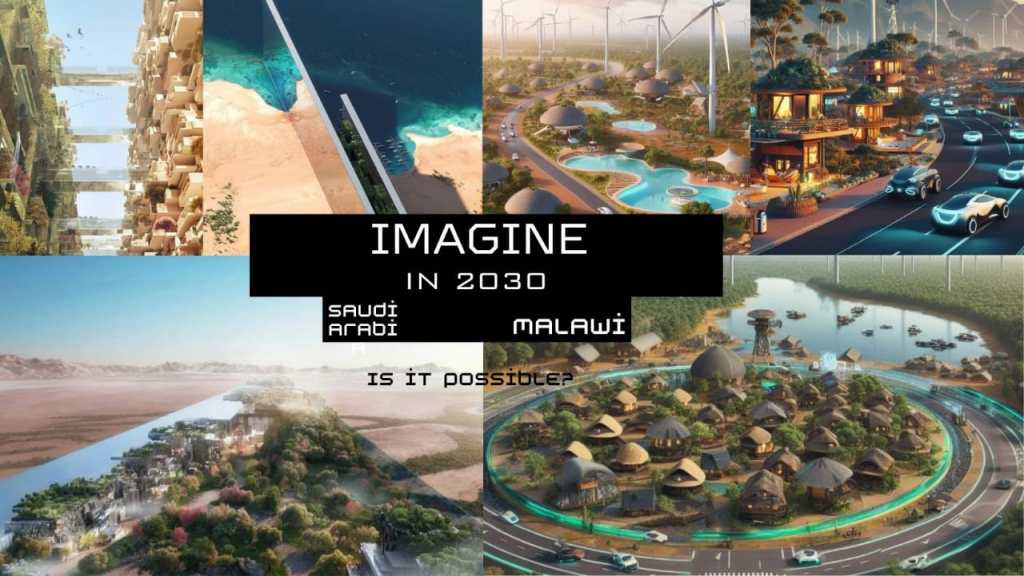
Its theme has been changed to “A wish to experience 2063 in 2030 in Malawi. Is it possible?“. Previously, it was “The quest into the possibility of a nation of digital villages by 2030”.
The title was changed to emphasize on the envisioned and desired well-being, self-sufficiency and sustainability, using the word “livability”. In the same line, the term “futuristic” is associated with application of technology to make life better than the term “Cyber” which is generally associated with extensive and intensive use of technology.
On the other hand, it was a hard decision to drop the most common or familiar term “digital villages” or its nearest “digital-driven rural transformation” in the theme, but it had to be done. It is all because of the need to eliminate donor-dependent or non-profit associated features. Just as it is inside, the expeditions must demonstrate the mission’s independence of and disassociation from the nonprofit ecosystem.
The new theme tries to show that the expeditions and 3rdWorld Xplora business itself are oriented towards the same development goals but using a totally unconventional approach, that is associated with the commercial sector as well as humanistic principles.
We may be talking about the same thing. But our practical actions are totally different.
It has been 6 months since the local “internet and tech centers” of the rural cyberspace and analytics platform were shut down soon after opening for testing in January 2023. It has been one year and a half since the testing of this platform started, in April 2022. In fact, the search for an effective online platform for helping those in need to make use of the internet and other digital technologies started in February 2020.
The rural cyberspace and analytics platform was conceptualized with an aim to condense internet content and digital tools relevant to rural communities, create awareness and support the use through local internet centers, and simultaneously generate data on the usage, outcomes and impact including the associated social-economic and environmental indicators to help stakeholders design cost-effective permanent solutions.
Locally, the platform was designed to be used by CBOs and local social entrepreneurs who would collect the data essentially to enhance their own technical capacity and visibility to the supporting stakeholders. It was also planned to monetize the data collection services in the future, once successful, to allow the CBOs and entrepreneurs to earn from their social services.
In a traditional approach, the concept of a rural cyberspace and analytics platform has many challenges ranging from cost, to data privacy and legal or regulatory complications.
Most importantly, its use design fails to satisfy the preferences of the supposed local hosts, the target rural end-users (subsistence farming households) and development stakeholders, who were thought would need the data.
For these reasons, it was concluded that only those exceptionally interested in the platform’s mission might find its outputs valuable and share their views for use as data. Much data is to be acquired from open-sourced intelligence and ethnography (locally), and focusing on non-sensitive publicly available information and non-proprietary technologies – drastically reducing the hectic costs, and data privacy and regulatory complications.
Updates are to be made available mainly on LinkedIn and Facebook pages, and WhatsApp channel, and shall clarify and strongly emphasize on who might find the content valuable. No one is to be invited, approached, encouraged or called to action through any means, such to follow or share their views on the platform’s content, to ensure no one is disappointed and confused with the visibly relevant content but that turns out to be worthless.
September 2023 marks another most important transition in the development of COMP@SS platform and 3rdWorld Xplorations as a social-impact business. Experience has brought more understanding and clear mapping of the mission, bringing more hope and confidence than before. As the return to the field nears, so many changes have been made.
“Why are many smallholder farmers not adopting digital solutions? Is there any impact on those few who have adopted?”
By George Zagwazatha Goliati (COMP@SS designer)
This is a topic we debated as e-agriculture stakeholders in August of 2023, through WhatsApp. Basically, it started with a question: why do e-agri-services providers seem not to be reducing the extensionist-farmers ratio? Coincidentally, I was examining the compatibility of user experience designs (UXDs) of digital solutions with the targeted rural farmers’ preferences, or psychographics. User experience (UX) design entails how much a product or service is valuable (meaningful) and relevant to users, and is easy and enjoyable to use.
After completing my exercise, I noticed that the experiences and ideas exchanged by the participants shared close similarities with my findings. However, the debate did not draw to the same conclusion as that I came up with. For this reason, I decided to run a simple content analysis of the debate based on Roger’s DOI theory and Van Dijk’s conceptual Framework on Digital Divide – Access to ICT, in order to objectively prove the similarities.
In addition, I intended to provide a constructive explanation of and highlight my view on the “incompatibility of UXDs of innovations with farmer preferences”, so that it can be clearly understood and related to the designing of the COMP@SS and other services, in the efforts to support development stakeholders create change or cost-effective permanent solutions, their donors seek.
6 themes were identified from different farmers’ behavior that have been observed by the participants. These themes were also identified from the assessment of the digital tools against the established adoption theories or models.
According to the analysis, the stakeholders’ views implied the same shortfalls of UXDs of digital innovations and that of the traditional evaluation approaches for measuring the impact. However, they did not openly, assertively or conclusively point out or identify the shortfalls of UXDs as the main reason why many farmers are not adopting digital solutions.
When one of the debate participants stated that “mindset change is required at all levels”, this observation proved that rural communities and development stakeholders are facing the same problem. In Malawi and possibly many poor countries, we all have the same fears. We are all very reluctant to talk about, accept and address the issue of shortfalls in user experience designs (UXDs) of innovations. Consequently, this topic is a sensitive and unlikable one.
By looking at its role in the success of the commercial sector, paying attention to user experience designing errors holds the key to the success of development services, since it could guide iterative designing of the innovations. With several development projects implemented in Malawi, our stagnant economic growth most likely roots from our deflection over ineffective UXDs of solutions to poverty. Therefore, digital solutions must be facing the same challenge.
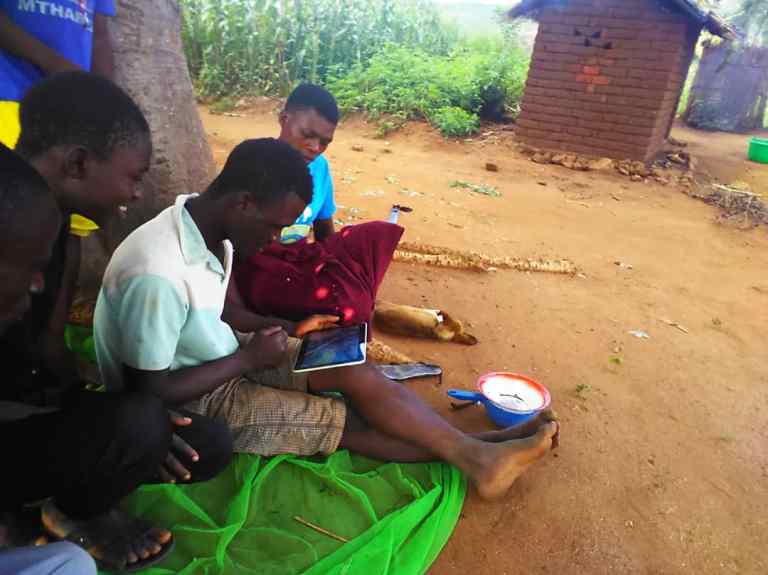
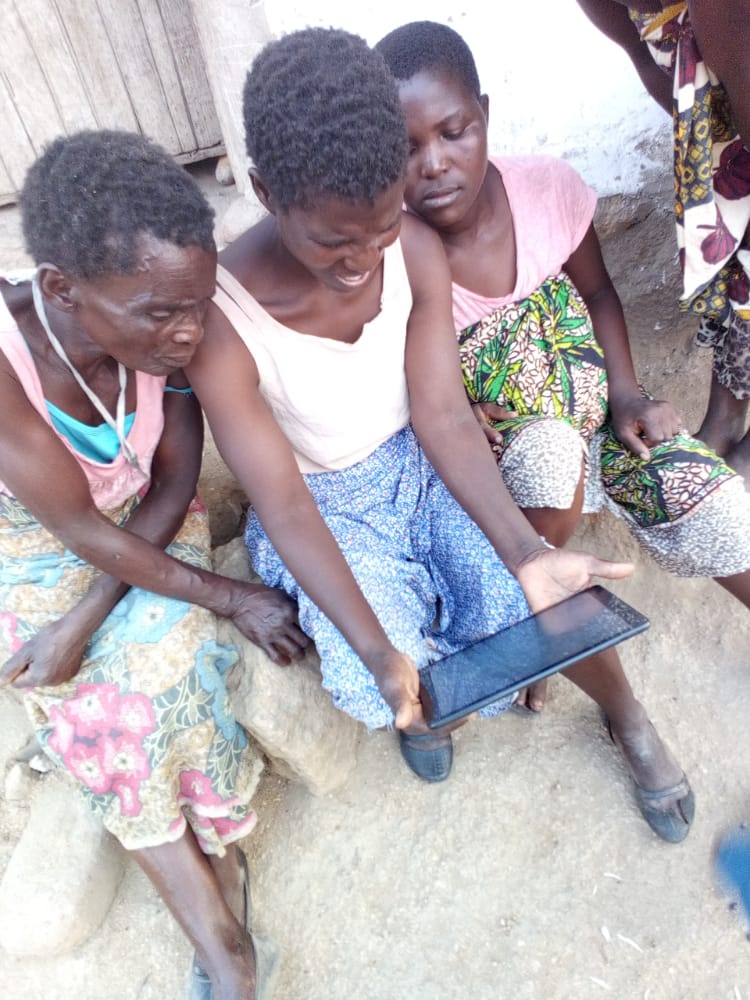
An illustration of rural residents sharing information using a digital device. 2022
Development of the rural cyberspace and analytics platform: Monthly highlights for August 2023
3rdWorld Xplorations
As we look forward to resume field-testing and demonstration of the rural cyberspace and analytics platform concept soon, we are excited to share with you some lessons we have gained in the month of August, 2023. In this month, we “discovered” a concept that challenges the conventional view of digital adoption rates and models, and offers a new way of disseminating and measuring the impact of some digital solutions. This prompted a revision of the demo platform, from version 1.1 to version 1.2.
Digital Solutions Adoption Rates Could Be High! While there is a general consensus that the adoption of digital solutions among rural communities is low, this might be wrong.
The wrong picture is drawn by misalignment or mis-expectations of who can use the digital tools and the evaluation angle after dissemination. For instance, in a rural community of 1000 farmers, probably there could be a single suitable user of most android applications. If this is taken into account and the suitable user adopts the app while 999 don’t, then the adoption rate could actually be 100%. But if the service provider expected all the 1000 or at least 100 farmers to adopt, then the evaluation results would indicate 0.1% or 1% adoption rate respectively.
There Are Very Few “SuitableUsers” This proposition was made after examining user experience designs of different existing digital solutions against the cultural values, social trends and other user (customer) characteristics of the targeted Malawian rural population (See Knowledge Diffusion in the Context of Development in Rural Areas). Roughly, over 90% of the targeted population fall out of suitable user groups of most digital solutions, even after receiving training and necessary resources.
Van Dijk (2020) notes that “because it is wrong to assume that physical access to computers and the Internet automatically entails all benefits associated with their use, the digital divide should not be considered as a divide of physical access only”. Even if resources are made available, most digital solutions are incompatible with the targeted users and their relative advantages are not visible, most likely impeded or shadowed by mis-expectations and mis-trust, derived from cultural values or social trends and preferences of the rural masses. Our local internet and tech centres model was one of the worst. These are some of characteristics that Van Dijk (2006) together described as “motivational barriers” along with the three others, that limit rural adoption of digital solutions.
Digital Solutions Diffuse As Value However, the good news is that instead of diffusion of innovation (DOI) as per Roger’s theory, there might be a process we may describe as “diffusion of value”. With this process, it is proposed that there could be some considerable indirect benefit or impact of the digital solutions in rural communities where these have been adopted by the very single suitable user.
This pattern was also noted by Selina Kapondera in her study in 2021, on the role of telecenters in Malawi. She found that the very few users of the telecenters shared the acquired knowledge with the non-users. This is basically described as “knowledge diffusion“. She argued that through this process, the users empower the rest of the community, but the traditional evaluation approaches have not been able to recognize and measure the impact.
Even though her study did not specify the innovations that were shared, the process is consistent with what we practically experienced in Zomba district, despite not with the digital solution involved. We noticed that some village members who learnt about Newcastle vaccination, showed no interest to “adopt” it, but they later bought the same vaccination from their fellow village member without knowing much about it, including its name.
“Suitable Users” Catalyze Diffusion of Value By Modifying Digital Solutions UXD Upon reflecting on the Newcastle vaccination case, we concluded that the majority of the rural community members might probably make use of a solution when its user experience design (UXD) has been modified to suit their preferences and capacity by the very only one early adopter or innovator (based on Roger’s DOI theory) in their village. In this case, they would not access and use it the way the Services Providers expected, and they would not even know the name. Therefore, we could not describe it as knowledge diffusion, but “value diffusion” since what is obtained is the value not the knowledge.
The Effects of Evaluation Approaches As a result, evaluation approaches that focus on awareness and direct access to or use of the innovation are more likely to miss out its impact on those who used it secondarily in some other way than that expected by the Services Providers.
Diffusion of Value is Paradoxical The concept of “diffusion of value” is complex and contradictory. Although it is a common phenomenon in life (e.g. public transport, maize mills), and we considered it earlier on during conceptualization of the platform, we have been able to understand it and its role in rural digital transformation more clearly this time.
In conclusion, it shows that some Services Providers and donors might be creating impact without noticing it, when traditionally measuring adoption rates. However, value diffusion is more likely to be absent or to be too slow and narrow with no or less suitable users, and if user experience design of the tool is far not aligned to the rural preferences and capacity. There are high chances that this is common with many available digital tools and several other promoted innovations in different fields such as cooking fuels and organic fertilizers.
From an informal social media discussion, it was noted that many stakeholders seem to be aware of the misaligned user experience design of digital solutions they are promoting, but many seem to be either unaware or uncertain of the driving factors and the possibilities of value diffusion process.
Currently, we are exploring suitable qualitative analysis, innovation diffusion and innovation or knowledge-acquisition evaluation models that can be used to determine (locate) availability of suitable users (early adopters or innovators), as diffusion points of digital solutions and other promoted innovations, to detect any impact and to learn the local diffusion and change models in a community. With this capacity as a research supporting services agency, we hope to help donors, development services providers and entrepreneurs accurately and precisely locate where to go, measure their impact and design upscaling approaches. Therefore, the discovery of “diffusion of value” has been a key step in the effort to build the “navigation” capacity of the COMP@SS. In absence of suitable users, we are still attempting to enhance our local businesses user experience design to subsequently modify those of some digital solutions towards rural communities’ preferences and capacity.
Martin Cooper of Motorola, shown here in a 2007 reenactment, made the first publicized handheld mobile phone call on a prototype DynaTAC model on 3 April 1973. Source: Wikipedia
Could we use this model to cut short the long way to rural digital transformation?
Could Kirkpatrick’s model and Roger’s DOI theory be used to identify early adopters of digital technologies?
Technology Synopsis: The history and evolution of the cellular phone technology
In 1973, Motorola released the DynaTAC, a non-commercial product, a prototype that was used to demonstrate the feasibility of cellular phone technology. It was developed by a team of engineers led by Martin Cooper, who made the first publicized handheld mobile phone call on April 3, 1973, using a DynaTAC prototype. The call was made to his rival, Joel Engel, who was the head of research at Bell Labs.
DynaTAC took 10 hours to charge, the power that lasted for 20 minutes of talk time. It had a small display that showed the phone number and the signal strength. Its memory could only store 30 phone numbers, and it weighed 1.2 kgs. It was a ground-breaking invention for Motorola and Martin Cooper himself, while it was no better than land-line and car-mounted mobile phones to the public. It had regulatory hurdles, technical difficulties, high costs, and low consumer demand.
Motorola announced the development of the Dyna-Tac in April 1973, saying that it expected to have it fully operational within three years. It took another 10 years for Motorola to launch the first commercially available cell phone, the Motorola DynaTAC 8000X, in 1983 at retail price of $3,995 (about $11,300 in 2022). Today, one of the latest cellular phones, iPhone 14 plus, weighs 203 grams, 15% of DynaTAC mass. It takes 1 hour to recharge from 0% and that can last for 20 hours of online video streaming.
Today, our eyes are always on cell phones. According to the International Telecommunications Union (ITU), there were 7.9 billion mobile subscriptions in 2020 and more than 5.5 billion (66%) of the 7.8 billion world population owned a smartphone.
Could we use this model to cut short the long way to rural digital transformation?
We all resist to technology or innovations, when inefficient and disruptive
In their early days, cellphones, electricity, cars, cameras, TVs and many other most reliable technologies today were ridiculed, condemned and rejected when they could not satisfy the users or demotivate with outlandish features than the existing means of achieving the same goals or value. Today, they are responsible for our modern, progressive and fulfilling life.
Basically, technology does not create new life processes, desires or satisfaction, they only either change the way we achieve them or ability to do the impossible and unmaginable. Technology or innovations in their early days are often ridiculous and are undesirable because most of us hate to be disrupted the way we do things, we have limited imagination of how and what things can be done and do not want to stress out thinking, trying out new things.
Internet and most of its constituent or contemporary technologies (including non-digital) are in their “early stages” or in incompatible form to many people, and worse in the rural areas. Most of the content and digital tools or technologies are in English language, require some familiarity with computers and are newly developed that they are still in their early stages.
In rural areas, access to internet is intermittent and less efficient due to limited network coverage, power supply and personal incomes to cover cost of data. Van Dijk (2005) categorised these into four types of access barriers to communication technology. These include; motivational access, physical access, digital skills and usage access barriers.
Underutilised opportunities
The Internet and its related digital technologies are now relieving us from most of our tasks which we used to do in a hard way and even those we couldn’t. Despite bringing some social problems along, the overall effect is evidently beneficial for human society.
Internet and digital technologies constitute continuously adding thousands of different technologies and those technologies consist of continuously adding millions of unique topics and functions (content). Most of these offer more efficient and effective ways of knowing what we need to know, doing what we find hard to do or accessing what we cannot afford to. However, a thin line of barriers always prevent many of us from leveraging these technologies or content.
This has consequently widened further the existing inequalities around access to social services and economic opportunities. This necessitated the creation of 3rdWorld Xplorations. The idea is not to donate devices, but to find possible ways of how underprivileged rural communities can leverage emerging technology to equally access the available social services and economic opportunities.
Testing the use of Kirkpatrick’s model and Roger’s DOI theory to identify early adopters of digital technology
From the broad idea of 3rdWorld Xplorations, we are attempting to design and build a semi-online platform to help rural communities leverage internet and digital tools by supporting with awareness, access and use, and simultaneously generate data that can help those orchestrating rural digital transformation to understand the usability, outcomes and impact of each internet content and digital tool.
We believe that this data can be used to design cost-effective permanent solutions and/or upscaling approaches, from efficient digital tools to efficient practical technologies such as clean energy, improved farming methods, educational content and healthy services that can be used by everyone and result in better living standards for all.
To successfully identify early adopters of digital technologies and content based on EM Roger’s Diffusion of Innovation (DOI) theory, we decided to analyze the available and emerging internet content and digital tools to create indepth and extensive awareness of their existence, functions, values (relative advantages) and setbacks or compatibility.
To conduct a successful analysis, we aim to try out the use of qualitative analysis and Kirkpatrick’s model of evaluating knowledge acquisition to highlight features that can allow early adopters to easily distinguish and recognize the content or tools they need most and can use according to its relative advantage, compatibility or known setbacks.
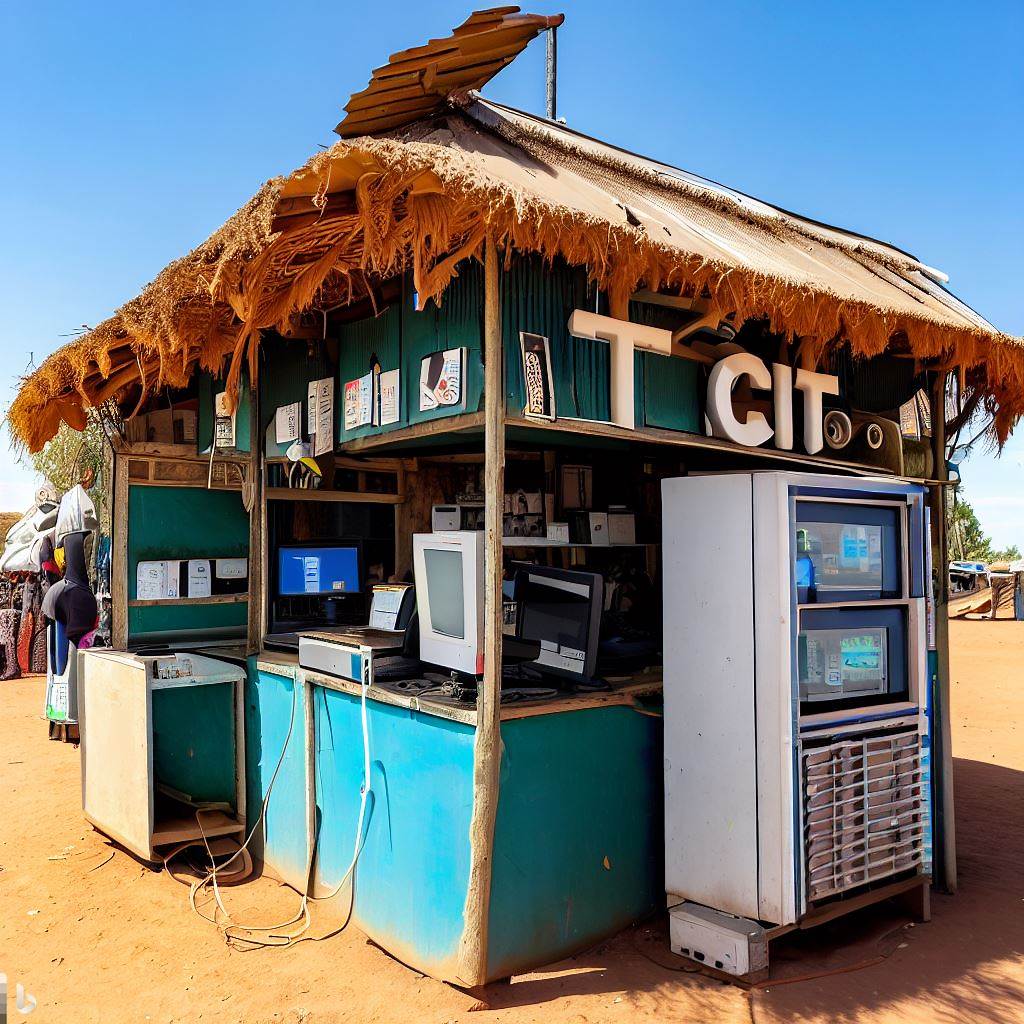
An AI-generated image depicting a “Burning” center at a local trading center.
The “success stories” of donor-funded digital initiatives
Digital initiatives are projects or programs that use information and communication technologies (ICTs) to address various social, economic, or environmental issues in rural areas. They can improve access to information, services, markets, and opportunities for rural people, especially women and youths (FAO, 2018)
Apart from e-government programs, Malawi Government and its development partners have been implementing digital initiatives in the rural communities with plausible success stories. However, most of them have not scaled up to the expected levels and created notable impact .
For example, the Government of Malawi, through Malawi Communication Regulatory Authority (MACRA), with the support of the World Bank and International Telecommunications Union (Connect A Constituency project) established over 50 telecenters (targeted 193) in some parts of the country to provide access to information, communication, education, and services for rural communities, especially women and youths. However, most of them are reported to be under-functioning or out of service. It is reported that the government abandoned, to focus on a similar digital initiative, Connect A School program.
Similar to digital initiatives, mechanization for value addition is also another pathway that has been identified for fostering rural economic growth. One Village One Product, initiated by Japan International Cooperation Agency (JICA) and Malawi Government in 2003, is one of most notable projects that successfully installed various types of machinery, such as oil presses, maize mills, rice hullers, cassava graters, peanut butter makers, soap makers and honey extractors in 140 villages across rural Malawi. Contrary, most of them never changed lives as intended, only to end up gathering dust.
Whilst things have gone that way, burning centers are perpetrating a parallel digital transformation in the rural areas while private maize mills have been supporting food processing more visibly than government and donor initiatives, and have become symbolic representation of rural trading centers.
Burning centers: the power behind parallel rapid rural digital transformation
Initially known as “Music Burning” centers, these are kiosks commonly located at trading centers in both rural and urban areas, that emerged in early 2000s as places for accessing burning (illegal copying) of music and video files onto CDs or DVDs. With the evolution of ipods, smartphones and flash disks along with memory cards, the kiosks shifted from “burning” to “sending” files. However, the “burning” identity has refused to die.
The penetration of smartphones has seen the centers becoming the main source of android apps for the rural, cutting off the “music” to become “Burning centers”. Generally, their signposts don’t talk about apps, rather just hit the nail on the head, about WhatsApp and Facebook APKs, with the additional of anti-virus and games APKs. They also offer flushing of phones and memory cards as well as phone-charging.
Together, the services “help rural communities use digital technologies”, facilitating rural digital penetration, in parallel to what government and donors are up to. This parallel digitalization has almost spread in all major rural trading centers while the productive donor-funded ones have stalled or remained local.
Lessons from burning centers and maize mills user experience models
By looking at the popularity and apparent profitability of “burning centers”, and the apps and kind of videos that are “bought”, there is indeed an acceleration of rural digital transformation; but which is largely oriented towards entertainment, socialization or casual stuff, instead of economic growth.
In another case, while OVOP machinery are gathering dust in rural Malawi, private maize mills often start early morning until darkness fall. Maize milling is one of most utilized and relied upon technologies at household level in rural areas. Households become stressed up whenever maize mills are not functional or not available at their local trading centers.
However, the parallel digitalization could hold the key for digital-driven rural development. It demonstrates that what matters is not (making available) the “technologies”, but the goals, the value and relevance of the services, and the convenience to the user.
Rural digital transformation could accelerate through alignment of initiatives or solutions with relevant activities, social trends, cultural values and norms and personal preferences. Digital solutions may need to have some market value and must be expected to compete like commercial products. That is, they may need to consider and emphasize on building on or matching user experience much more than “user needs” to drive prospective users from what they are accustomed to.
It shows that development services providers (DSPs) may have less interest to learn from user experience of donor-funded initiatives, to design effective and necessary services. Instead, much focus is drawn towards the need.
For instance, during the Malawi Forum for Agricultural Advisory Services (MaFAAS) 2023 Annual conference on 28 July 2023, some DSPs pointed out on the need for making digital devices available for the rural farmers, but none of them tempted to reflect on lessons that have been captured from some digital initiatives that actually implemented distribution of [smartphone] devices to the farmers or that of telecenters.
A miserable failure of a private-based enterprise to support rural use of internet
At least government and donor-funded initiatives have plausible success stories. Our attempt from a social entrepreneurship perspective apparently yielded the worst results.
As a social impact business, we took courage in January 2023 to open internet and tech centers in rural Blantyre district where residents could access phone-charging along with free access to this online platform (COMP@SS) that condenses available internet content and tools that can be used to overcome existing barriers against access to social services and economic opportunities such as agro-advisory, educational and job skills, and healthy services. The same rural residents that find it hard – but still pay – at burning centers and maize mills, did not even bother to take a glance at these free internet content and digital tools.
The knowledge that it is nothing more than just supporting and tracking use of the productive internet content and digital tools seems to push away the very same people most in need, even after getting exposed to some relevant content. It was therefore concluded that the internet content and tools are not immediately recognized and valued as essential and source of solutions to the existing livelihood problems the way boreholes and clinics are.
Despite having the problems, the contents and the whole service were out of expectations and preferences on how they solve their problems, which is basically determined by social trends, cultural/social values and norms.
In the next half of 2023, our task is to build an effective user experience, though we already started in August 2022, by dropping off nonprofit features and adopting a more commercial interface and approach that tempt to satisfy market needs.
In fact, the absence of visitors was a success. It reflects the true perceptions, preferences, attitude and reactions of the audience. Our mission is to accurately capture these characteristics and help donors and development services providers including government and entrepreneurs design practical technologies and delivery digital solutions with effective user experience, to make development interventions cost-effective and permanent.
Now the question is, “could we borrow a leaf from user experience models of burning centers and maize mills to enhance scaling up of digital solutions as well as their contained practical solutions to accelerate their impact on those most in need?“
What is “user experience”?
User experience (UX) is a term that describes how a user feels when interacting with a product, system, or service. It includes aspects such as usability, functionality, aesthetics, and emotions. User experience is important for creating products that meet the needs and expectations of the users, and that provide value and satisfaction.
According to Wikipedia, there are many definitions of user experience, but one of the most widely accepted ones is from the international standard on ergonomics of human-system interaction, ISO 9241, of the International Organization for Standardization (ISO), which defines user experience as a “user’s perceptions and responses that result from the use and/or anticipated use of a system, product or service”.
User experience design is the process of designing products that provide meaningful and relevant experiences to users. It involves researching the users’ needs, preferences, and behaviors, as well as testing and evaluating the product’s performance and usability. User experience design also considers the context of use, such as the environment, the device, and the task. User experience design aims to create products that are easy to use, enjoyable to use, and that fulfill the users’ goals.
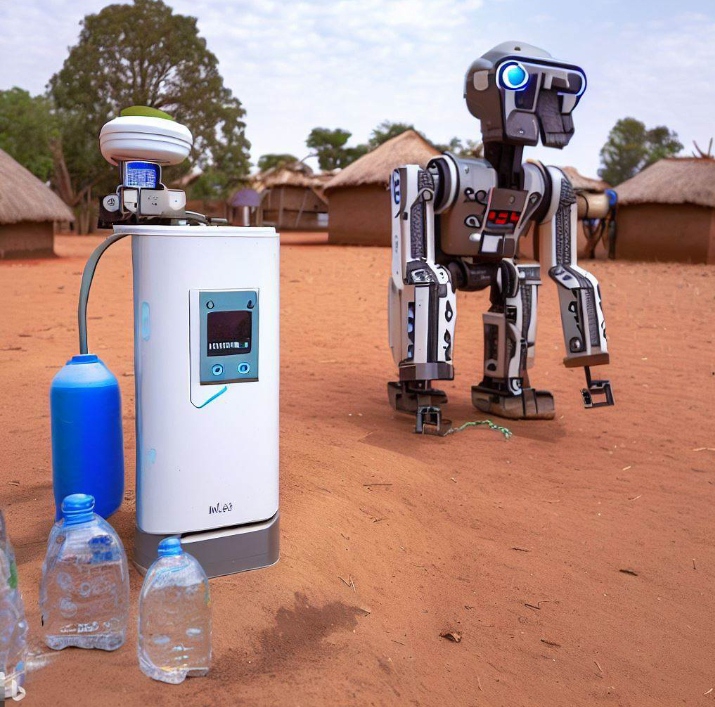
An AI-generated image depicting a robot and a water dispenser servicing in a rural community.
INTRODUCTION
3rdWorld Xplorations is a budding private social enterprise with a mission to support data collection and technology access for research and technology extension in rural development and nature conservation.
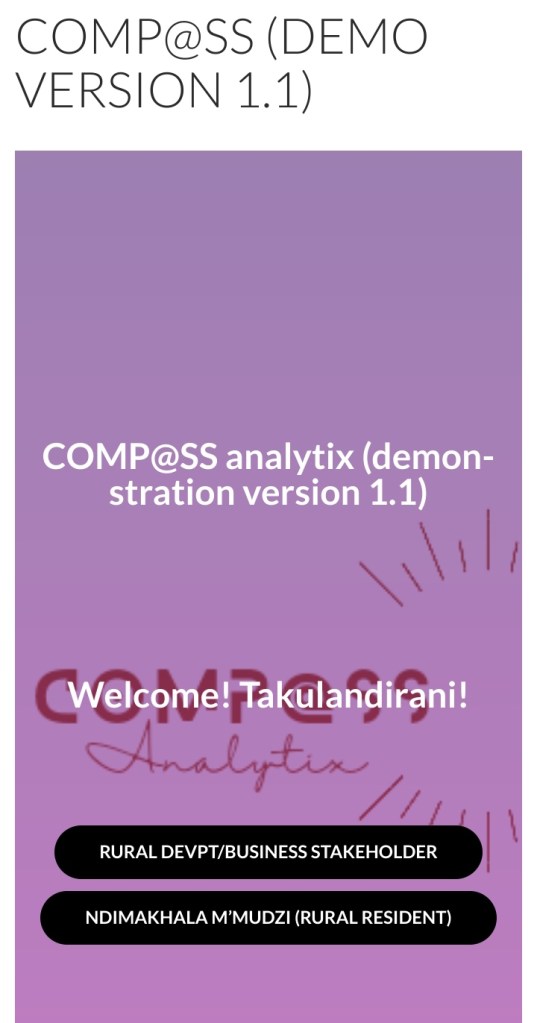
The landing page of the platform (COMP@SS), the main platform.
As one of its product/service, 3rdWorld is attempting to design and build a “rural cyberspace and analytics” platform, named COMP@SS, that is aimed at supporting the use of internet and other digital technologies in rural communities and simultaneously generate data that can be used by researchers, donors, NGOs, entrepreneurs, etc to design cost-effective solutions, mainly for creating digital villages.
2023 BRIEF REVIEW
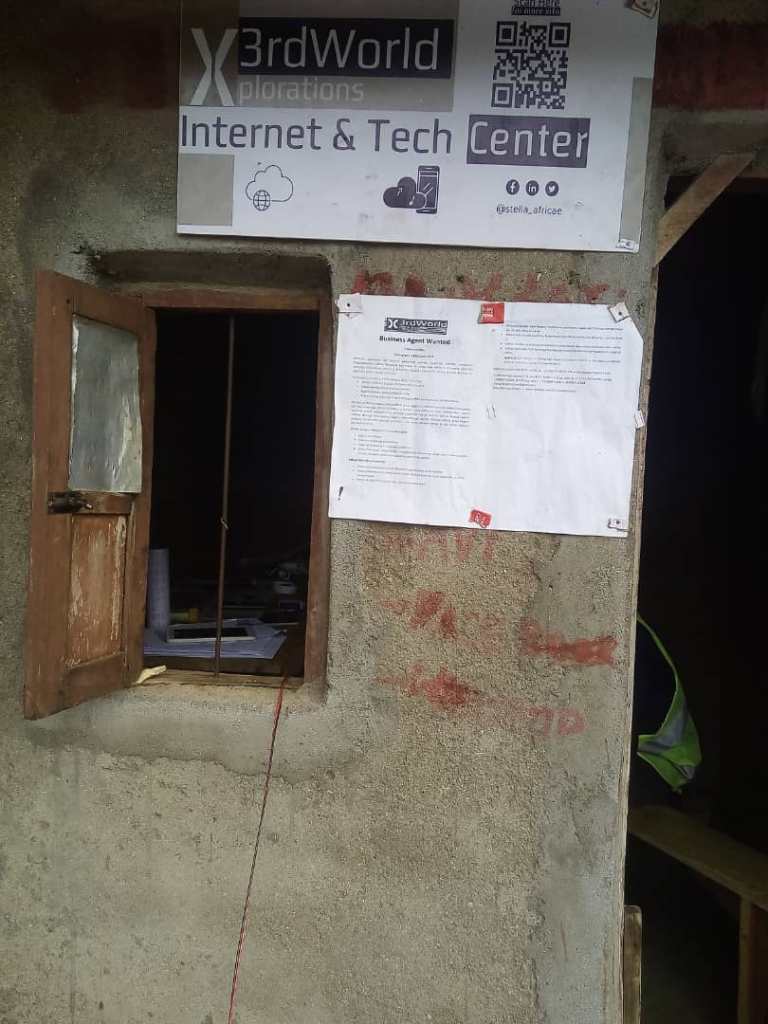
One of two Internet and Tech Centers that were offering access to rural-relevant internet content and digital tools through payable phone-charging services.
In the first half of 2023, the efforts to support rural communities’ use of internet went unused.
For 3 months of full operations, not even one person out of nearly 70 people exposed, including the hosts themselves, sought to use or view the identified rural-relevant internet content and digital tools to overcome even some well known existing knowledge gaps and access barriers.
With an impressive participation in the agro-advisory online video shows during first months of field testing over one year ago, the community members’ interest has been declining with more clarification on the platform’s actual mission.
The knowledge that it is nothing more than just supporting and tracking use of productive internet content and digital tools seems to push away the very same people most in need, even after getting exposed to some relevant content.
So why are we still persisting with the mission?
Find out more from this biannual review that briefs on the lessons we have learnt, and our opinion on the prospects of extensive digital-driven rural transformation (digital villages) in least developed countries, from the data generated so far. What is your opinion?
Attached to the review is our technical brief on the purpose of providing free access to internet content, that tries to explain the motive behind the persistence on the mission.
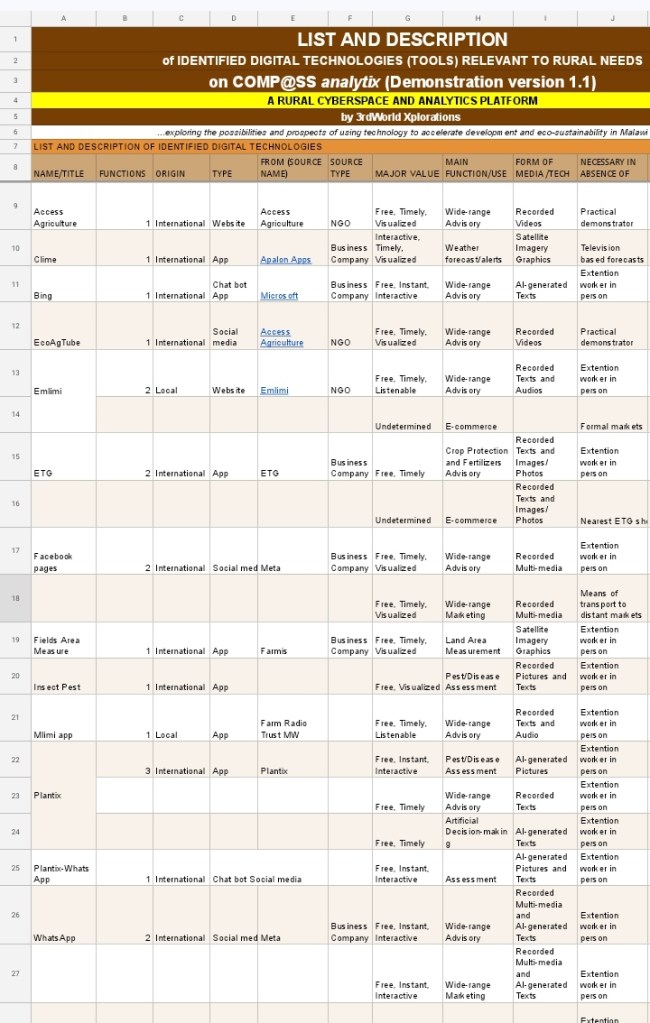
An excerpt from the agricultural digital tools analysis.
Is it promotion of rural-relevant internet content and digital tools? – COMP@SS Development Monthly Highlights for June 2023
In the month of June 2023, more effort was drawn towards designing analysis of the rural-relevant internet content and digital tools.
The exercise has been fascinating and challenging at the same time that it was not completed as planned. It was extended to the month of July 2023.
The analysis targets the rural audience as a foundation for creating indepth and extensive awareness of identified relevant internet content and digital tools.
However, there are risks of data privacy and safety violation and misinformation.
As such, a technical brief has been prepared for clarification on the measures that have been taken. The brief attempts to digest professional data management standards and how they have been incorporated into 3rdWorld Xplorations policies on Transparency and Accountability and Data Privacy and Safety.
One of the measures would involve making the analysis available to the stakeholders. Anyone interested to know what the rural communities would be informed about a specific internet content or digital tool must be able to do so.
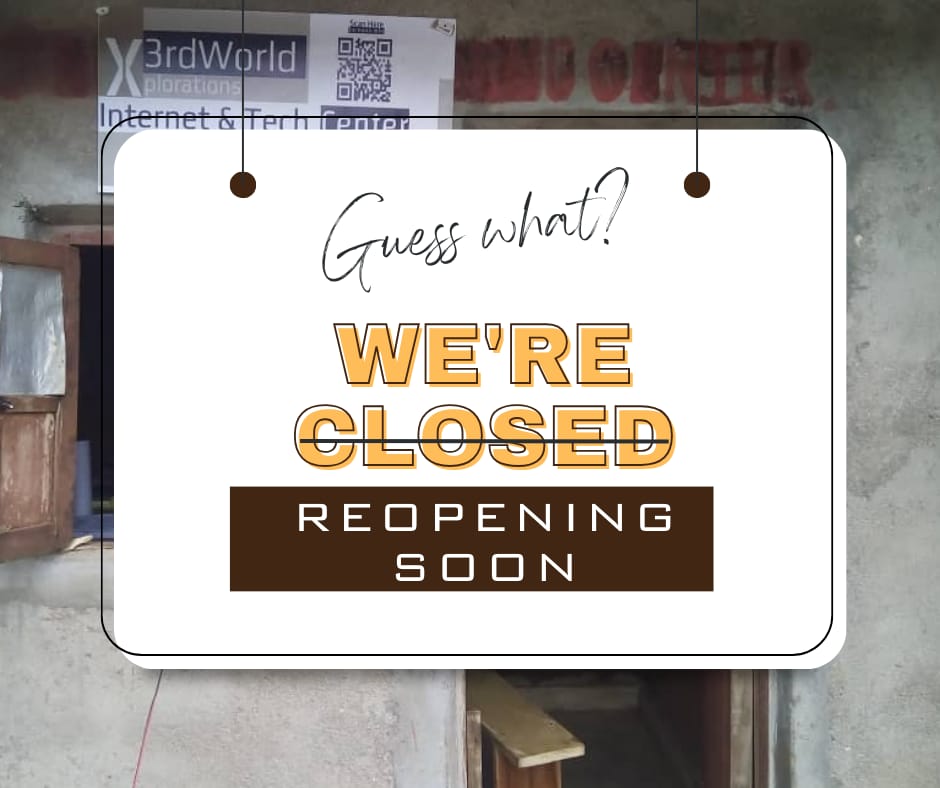
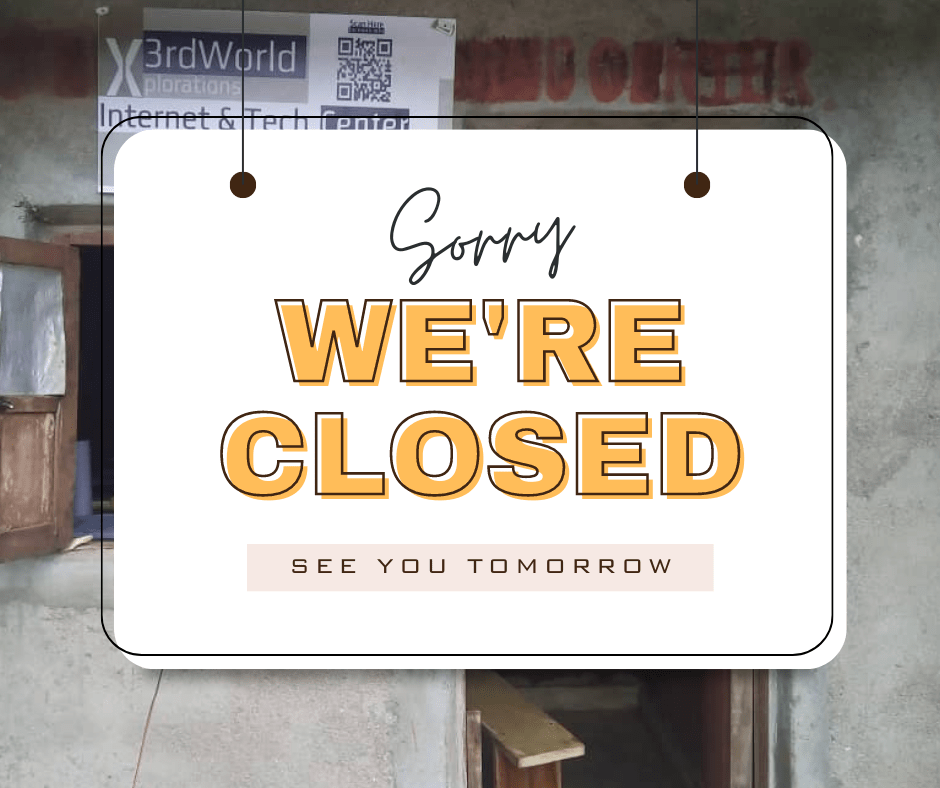
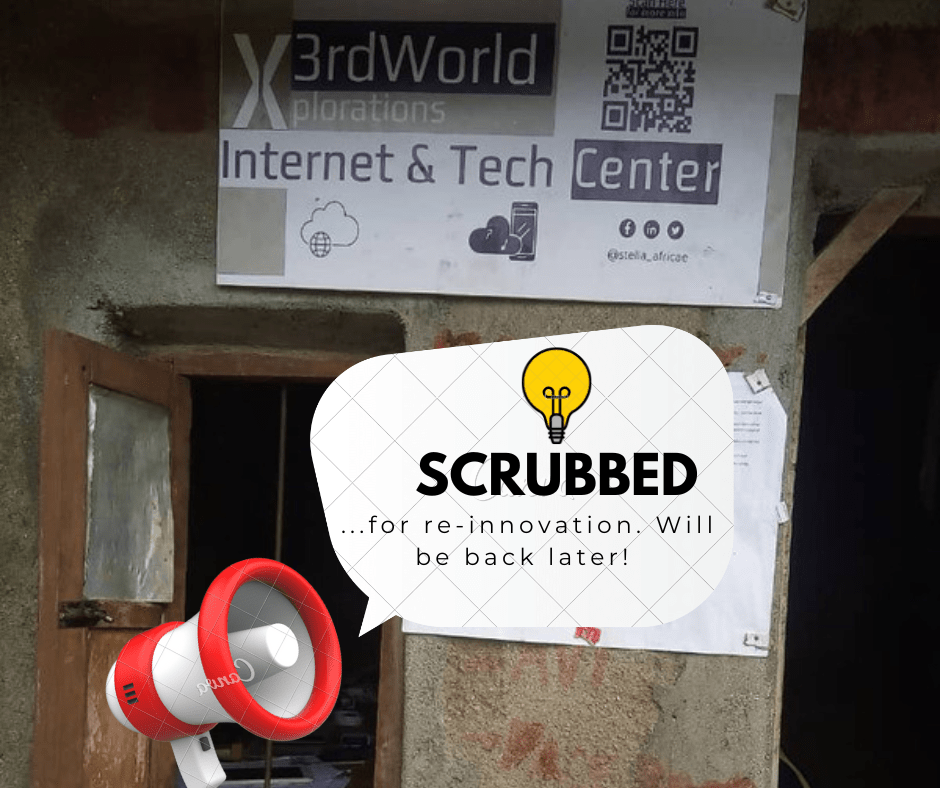
One of the closed local internet and tech centers (Domwe center).
Major Lessons and Changes in May: The Reorganization of The Platform and Expeditions
After proving that a simple “internet” notice is less likely to attract and make the rural recognize the relevance of its content to their real life problems by April 2023, it was time to start applying indepth and extensive awareness strategies. However, the performance of the local agents indicated that they, or any, would not be able to handle these “complex” expensive awareness strategies. This triggered a suspension and a reorganization of the platform’s field operations and the Cyber 3rdWorld Expeditions surveys in May 2023.
To enhance the awareness of the internet content in the rural communities, the online front-end interface was revised. Apart from using illustrative posters, street-videos and events, it was discovered that integrating the accompanying local center businesses on the online user-interface would give the rural masses maximum insightful exposure to the available digital contents.
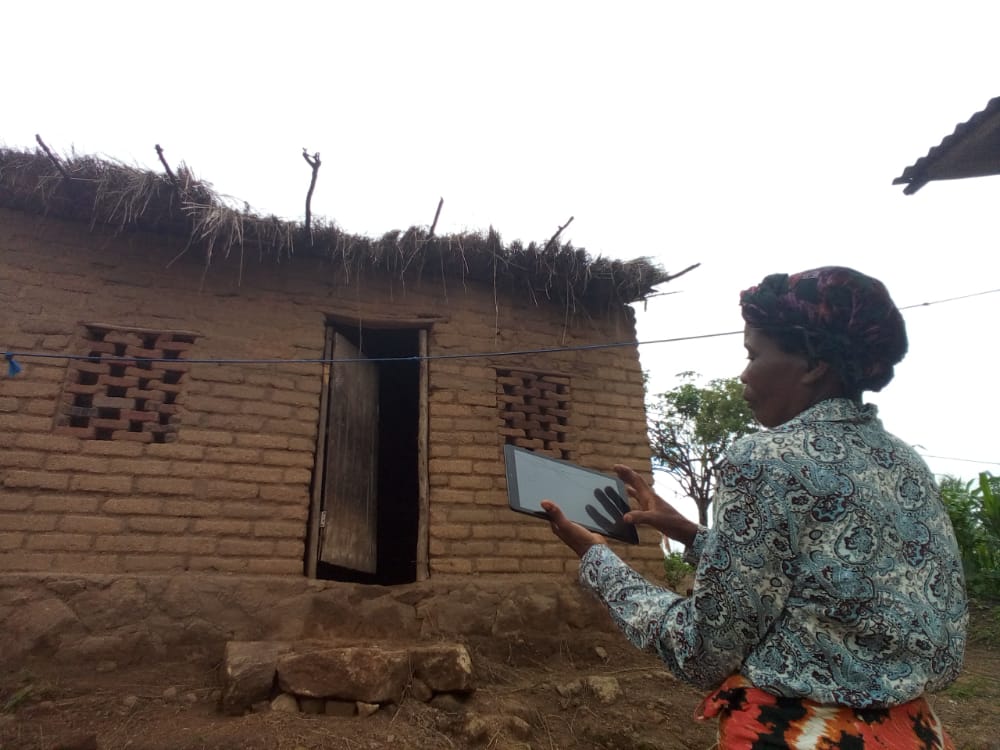
A photo of a rural woman using a tab (2023)
Defined as “rural e-trading services”, the rural would have a chance to buy a match box at an urban price or sell 2kgs of beans with a few clicks on the sales tab where the relevant internet contents can be briefly visualized. The community members would also have an opportunity to digitally market ethnobotanical collections, eco-innovations and cultural/heritage arts at local cultural centers and botanical gardens, aka eco-learning and creativity centers (eco-centers) and have access to nature e-monitoring tools through the “rural digital eco-tourism services”.
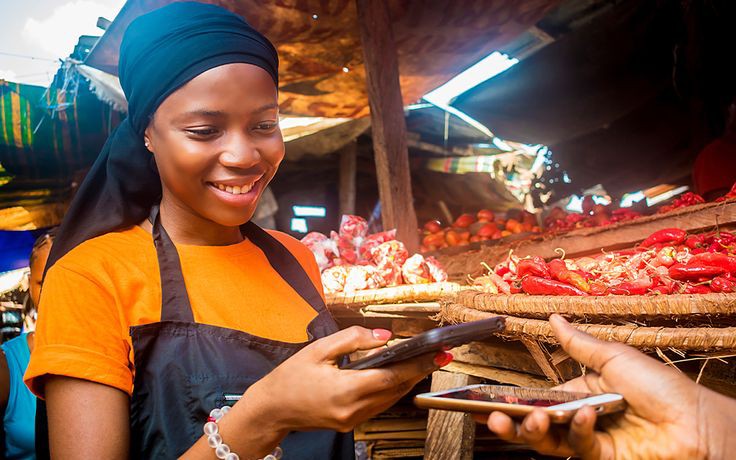
A photo of a sales woman transacting with a customer using a smartphone. Credit: Confidence Nzewi (Nigeria).
Rebranding of the Rural Cyberspace Platform
Women taking a glance at the available internet content and digital tools in Blantyre (2022).
Basically, the platform aim is to enable rural masses be aware of, access and use the relevant internet content and digital tools they practically need, and track the usage/adoption, the outcomes and associated social-economic and environmental sustainability indicators.
An illustration of the user analytics. Photo Credit: WordPress/Flickr
Inherently, the process would qualitatively measure the users/villages’ interest, capacity and willingness to adopt specific solutions, and learn their models of change to help donors and stakeholders design cost-effective permanent solutions. Eventually, the platform would get every necessary information and data for community development and marketing organized into one place and easily accessible to everyone.
In this view, the platform is expected to help rural masses navigate to the rightful solutions or opportunities on the “sea” of internet and technology and simultaneously help donors and development services providers navigate to those most in need on the “sea” of “beneficiaries”.
This illustration inspired the change of the name of the platform from Village Internet to COMP@SS analytix or COMP@SS in short, to reflect its kind of navigation feature.
The simple “internet” notice primarily used was done as part of testing how the rural would respond or react to the word “internet” without “non-profit” features, and most importantly, to ensure maximum accuracy of visitors reactions, to enhance the navigation capacity.
Cyber 3rdWorld Expeditions Reorganized
Reflecting on the navigation feature, it was realised that this is the same objective of the Cyber 3rdWorld Expeditions surveys that were supposed to be conducted this year (2023) before developing the version 2 of the platform, and as a sort of baseline survey.
With no visitors recorded at both demo centers (Domwe and Mayera), it may be deduced that the villages are less likely to adopt the use of digital technologies by the particular time. However, this conclusion may be misleading since the community was not provided with full awareness as needed and designed.
Furthermore, it would also require to compare or examine how the communities responded to any previous digital-based interventions. For instance, Domwe has seen two digital developments in the agricultural and education sectors, both never went far. Understanding how they exactly responded would help to draw a more accurate conclusion.
This was basically the role of Cyber 3rdWorld Expeditions surveys, but from a different angle. These surveys were supposed to identify almost all digital interventions that have been introduced in Malawi and assess how the target communities responded and draw a common conclusion.
After a careful review of the platform’s navigation feature and the expeditions surveys, it was seen necessary to integrate the survey with the platform and take a specific-community approach.
The Overall Reorganization of the Rural Cyberspace Platform and Expeditions
In the new arrangement, it will take at least 5 months to fully create indepth and extensive awareness of relevant internet contents and digital tools, allow access to internet and conduct at least two household surveys to monitor practical adoption and outcomes.
This period would allow “anthropological” approach to understand how the community has been responding to past and present interventions and what have been their own initiatives, in order to help stakeholders draw a more accurate conclusion about its interests, capacity and willingness to adopt digital technologies and specific solutions or products.
This initial phase will be referred to as the “expedition”, and together they will remain under the brand “Cyber 3rdWorld Expeditions”. These expeditions are expected to achieve the same objective; to explore the possibilities and prospects of using digital and other technologies [by government and its partners] to accelerate rural development and eco-sustainability in Malawi.
2 or 3 communities within the same region, defined by local trading center or conservation site may be engaged at a time. During this period, local youths may be invited to attend lessons for digital literacy and applications as well as rural development and nature conservation M&E. The dedicated ones may be engaged in apprenticeship (mentoring) for local agents role.
Discontinuity of Local Internet/Sales Agents
Domwe Internet and Tech Center in Blantyre closed.
In the first quarter of 2023, a new important lesson was learnt from the field operations. It was thought that it is the experienced volunteers who think that any social impact mission is a donor-funded project, and donor funds are everyone’s cake that anyone has a right of a share by pretending to volunteer in the mission. No, it’s almost anyone.
The “inexperienced” local agents that were engaged with the hope of bringing new perception were lately also found to be “pretending”, with a hidden agenda, totally diverting away from the mission. In fact they were at the bottom ladder of adopters that most likely, they could be a source of discouragement to any prospective internet users, even lead adopters.
It has been learnt that most of the local agents, except two, engaged in the development of the rural cyberspace implicitly strived to have their share of the very little private investment.
Introduction of COMP@SS Sole Explorer, Followers and Local Guides
The events mentioned above incited the decision to make the Cyber 3rdWorld Expeditions and the field implementation of the rural cyberspace platform a one-man mission, as a sole explorer. However, those interested to use the monitoring tools, sell items or visit the internet content and provide feedback, shall be accommodated, and shall be referred to as “COMP@SS followers” or “rural digital champions”. Specifically, users of the monitoring tools shall be referred to as “local guides” and shall be recognized on the promoted posts.
The first expedition will commence in September or October in Zomba and Blantyre districts, targeting the existing trading centers of Nankhunda and Domwe (Mayera-M’dala excluded) for establishing e-trading kiosks. The expedition will include the attempt to establish eco-centers near Zomba forest and Michiru forest, and if possible, near Lake Chilwa and Chikala rain forest.
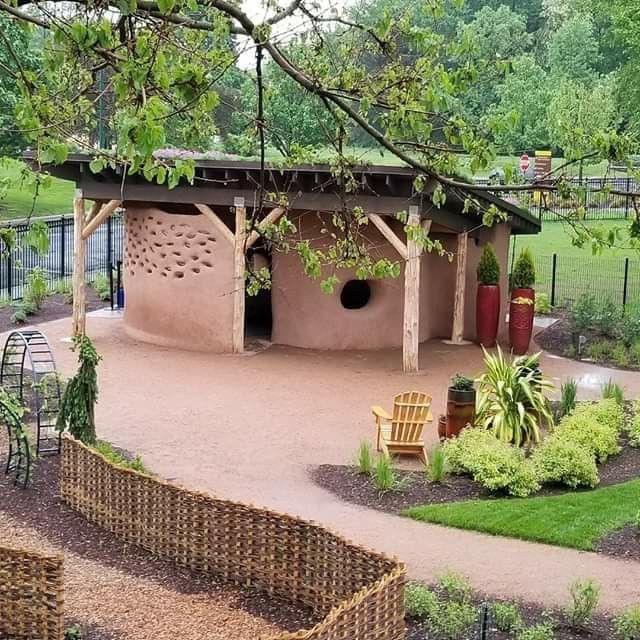
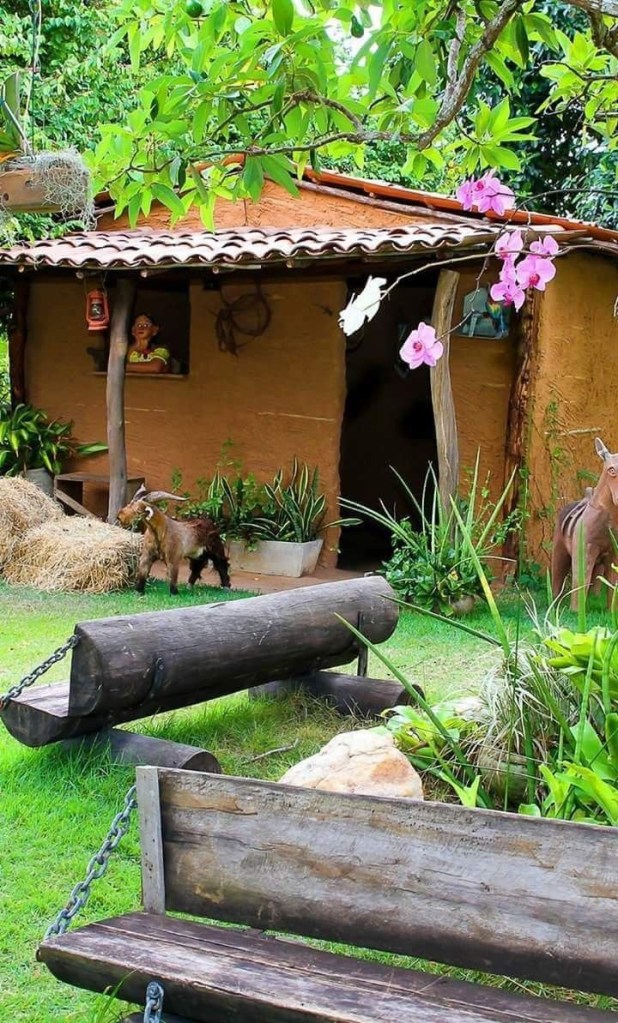
The Concept of the Village-based Cultural Centers and Botanical Gardens (Eco-learning and Creativity Centers) developed in 2015. Photos from Pinterest (different authors)
With all these changes, the raising of the $15,000 has been shifted to 2024, consequently, adding another year of development of the platform. Whilst looking forward to December 2025 for official launching of the platform, the national wide coverage goal timeline remains the same, 2030. The actual website and app will be built in 2025.
The Unfortunate Common Misconception
Almost everyone thinks that our societal change or development is a bait for immediate benefits or means of earning personal income only, and it is in the interest of foreign donors. As noted last year, it shows that everyone is convinced that social impact mission is where people claim to volunteer for community benefit, development or change, with the actual purpose of luring donors to access the funds but only to practically fulfill their personal needs and interests rather than that of said mission.
In exceptional cases, there are some very few individuals who are not driven by self monetary gains, but for the benefit of the community. However, they and their communities strongly take relief aid and other immediate benefits as solutions to poverty. Long-term solutions are in most cases seen as useless ideas or as barriers to immediate benefits.




 COMP@SS