The “success stories” of donor-funded digital initiatives
Digital initiatives are projects or programs that use information and communication technologies (ICTs) to address various social, economic, or environmental issues in rural areas. They can improve access to information, services, markets, and opportunities for rural people, especially women and youths (FAO, 2018)
Apart from e-government programs, Malawi Government and its development partners have been implementing digital initiatives in the rural communities with plausible success stories. However, most of them have not scaled up to the expected levels and created notable impact .
For example, the Government of Malawi, through Malawi Communication Regulatory Authority (MACRA), with the support of the World Bank and International Telecommunications Union (Connect A Constituency project) established over 50 telecenters (targeted 193) in some parts of the country to provide access to information, communication, education, and services for rural communities, especially women and youths. However, most of them are reported to be under-functioning or out of service. It is reported that the government abandoned, to focus on a similar digital initiative, Connect A School program.
Similar to digital initiatives, mechanization for value addition is also another pathway that has been identified for fostering rural economic growth. One Village One Product, initiated by Japan International Cooperation Agency (JICA) and Malawi Government in 2003, is one of most notable projects that successfully installed various types of machinery, such as oil presses, maize mills, rice hullers, cassava graters, peanut butter makers, soap makers and honey extractors in 140 villages across rural Malawi. Contrary, most of them never changed lives as intended, only to end up gathering dust.
Whilst things have gone that way, burning centers are perpetrating a parallel digital transformation in the rural areas while private maize mills have been supporting food processing more visibly than government and donor initiatives, and have become symbolic representation of rural trading centers.
Burning centers: the power behind parallel rapid rural digital transformation
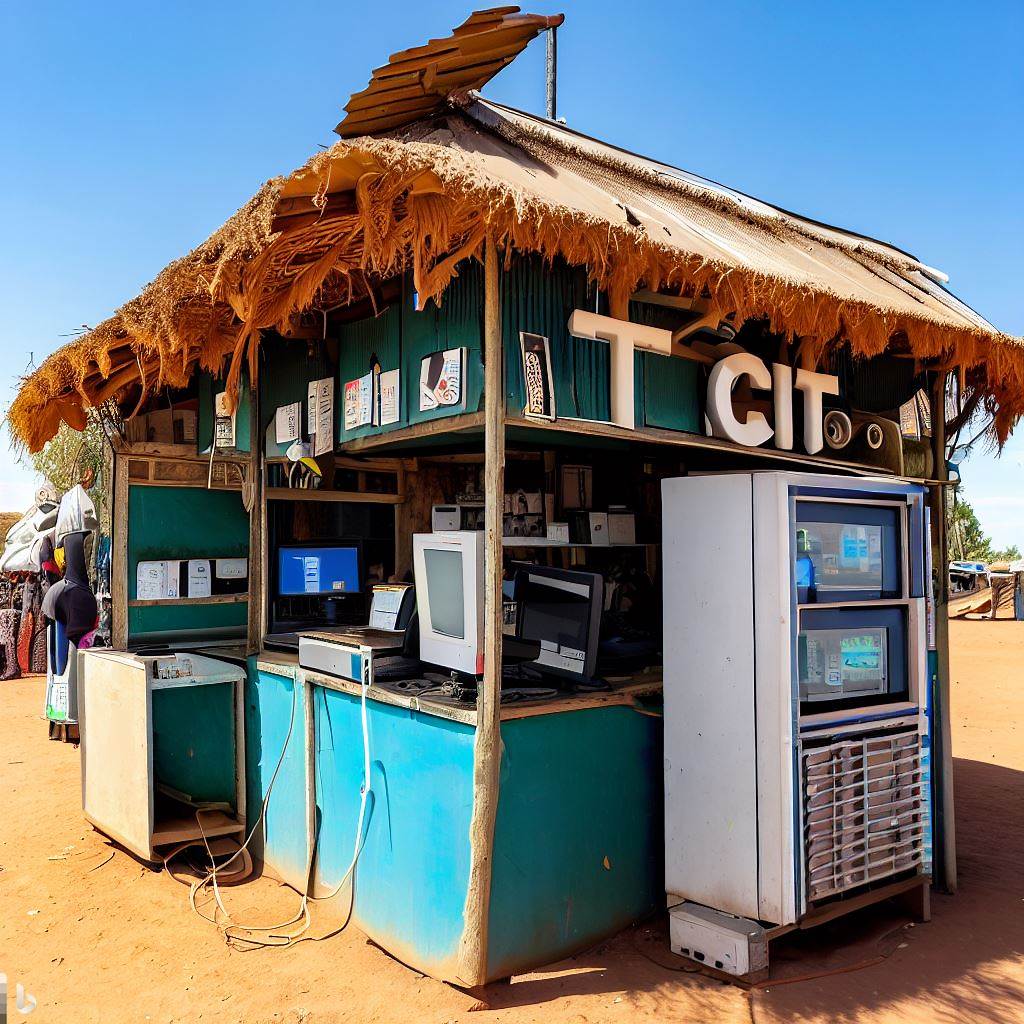
Initially known as “Music Burning” centers, these are kiosks commonly located at trading centers in both rural and urban areas, that emerged in early 2000s as places for accessing burning (illegal copying) of music and video files onto CDs or DVDs. With the evolution of ipods, smartphones and flash disks along with memory cards, the kiosks shifted from “burning” to “sending” files. However, the “burning” identity has refused to die.
The penetration of smartphones has seen the centers becoming the main source of android apps for the rural, cutting off the “music” to become “Burning centers”. Generally, their signposts don’t talk about apps, rather just hit the nail on the head, about WhatsApp and Facebook APKs, with the additional of anti-virus and games APKs. They also offer flushing of phones and memory cards as well as phone-charging.
Together, the services “help rural communities use digital technologies”, facilitating rural digital penetration, in parallel to what government and donors are up to. This parallel digitalization has almost spread in all major rural trading centers while the productive donor-funded ones have stalled or remained local.
Lessons from burning centers and maize mills user experience models
By looking at the popularity and apparent profitability of “burning centers”, and the apps and kind of videos that are “bought”, there is indeed an acceleration of rural digital transformation; but which is largely oriented towards entertainment, socialization or casual stuff, instead of economic growth.
In another case, while OVOP machinery are gathering dust in rural Malawi, private maize mills often start early morning until darkness fall. Maize milling is one of most utilized and relied upon technologies at household level in rural areas. Households become stressed up whenever maize mills are not functional or not available at their local trading centers.
However, the parallel digitalization could hold the key for digital-driven rural development. It demonstrates that what matters is not (making available) the “technologies”, but the goals, the value and relevance of the services, and the convenience to the user.
Rural digital transformation could accelerate through alignment of initiatives or solutions with relevant activities, social trends, cultural values and norms and personal preferences. Digital solutions may need to have some market value and must be expected to compete like commercial products. That is, they may need to consider and emphasize on building on or matching user experience much more than “user needs” to drive prospective users from what they are accustomed to.
It shows that development services providers (DSPs) may have less interest to learn from user experience of donor-funded initiatives, to design effective and necessary services. Instead, much focus is drawn towards the need.
For instance, during the Malawi Forum for Agricultural Advisory Services (MaFAAS) 2023 Annual conference on 28 July 2023, some DSPs pointed out on the need for making digital devices available for the rural farmers, but none of them tempted to reflect on lessons that have been captured from some digital initiatives that actually implemented distribution of [smartphone] devices to the farmers or that of telecenters.
A miserable failure of a private-based enterprise to support rural use of internet
At least government and donor-funded initiatives have plausible success stories. Our attempt from a social entrepreneurship perspective apparently yielded the worst results.
As a social impact business, we took courage in January 2023 to open internet and tech centers in rural Blantyre district where residents could access phone-charging along with free access to this online platform (COMP@SS) that condenses available internet content and tools that can be used to overcome existing barriers against access to social services and economic opportunities such as agro-advisory, educational and job skills, and healthy services. The same rural residents that find it hard – but still pay – at burning centers and maize mills, did not even bother to take a glance at these free internet content and digital tools.
The knowledge that it is nothing more than just supporting and tracking use of the productive internet content and digital tools seems to push away the very same people most in need, even after getting exposed to some relevant content. It was therefore concluded that the internet content and tools are not immediately recognized and valued as essential and source of solutions to the existing livelihood problems the way boreholes and clinics are.
Despite having the problems, the contents and the whole service were out of expectations and preferences on how they solve their problems, which is basically determined by social trends, cultural/social values and norms.
In the next half of 2023, our task is to build an effective user experience, though we already started in August 2022, by dropping off nonprofit features and adopting a more commercial interface and approach that tempt to satisfy market needs.
In fact, the absence of visitors was a success. It reflects the true perceptions, preferences, attitude and reactions of the audience. Our mission is to accurately capture these characteristics and help donors and development services providers including government and entrepreneurs design practical technologies and delivery digital solutions with effective user experience, to make development interventions cost-effective and permanent.
Now the question is, “could we borrow a leaf from user experience models of burning centers and maize mills to enhance scaling up of digital solutions as well as their contained practical solutions to accelerate their impact on those most in need?“
What is “user experience”?
User experience (UX) is a term that describes how a user feels when interacting with a product, system, or service. It includes aspects such as usability, functionality, aesthetics, and emotions. User experience is important for creating products that meet the needs and expectations of the users, and that provide value and satisfaction.
According to Wikipedia, there are many definitions of user experience, but one of the most widely accepted ones is from the international standard on ergonomics of human-system interaction, ISO 9241, of the International Organization for Standardization (ISO), which defines user experience as a “user’s perceptions and responses that result from the use and/or anticipated use of a system, product or service”.
User experience design is the process of designing products that provide meaningful and relevant experiences to users. It involves researching the users’ needs, preferences, and behaviors, as well as testing and evaluating the product’s performance and usability. User experience design also considers the context of use, such as the environment, the device, and the task. User experience design aims to create products that are easy to use, enjoyable to use, and that fulfill the users’ goals.
 COMP@SS