Who We Are
AfriCan Xplorations has been renamed and registered as Third World Xplorations Research & Technologies aka 3rdWorld Xplorations.
Even though founded in 2015 as ecoarms, as a community-based organizations consulting firm, it is still an early stage social enterprise. After facing growth challenges eversince, the enterprise was revived as a consulting agency in tech-oriented community development research and extension services for donors, development services providers, researchers and entrepreneurs as well, in 2021.
Basically, it is just like any other research consulting firm that collects data for clients. The difference is on the addition of facilitating technology transfer, extension services or information communication to reach the last mile, the overall application of advanced technologies at the very local level in the processes and the focus on the impact or change.
What We Do and Why: Vision and Mission
The social enterprise was revived on a vision of a world where everyone has equal access to social services and sustainable development opportunities.
This necessited launching of a mission to help rural community organizations harness technology and data to help donors, NGOs, researchers and entrepreneurs design cost-effective interventions, and widely, effectively and efficiently serve their communities, even the most disadvantaged.
How We Are Doing It
To make our mission spontaneously possible and an infinite chain reaction, it was discovered essential to get every necessary information and data for rural community development organized into one place and easily accessible to everyone. That’s bringing the rural communities and development services providers closer and on to a same page.
It is this objective that transpired the attempt to build a simple semi-commercial low-budget web-based set of rural data collection (M&E) platforms and cyberspace for accessing and communicating necessary information and data for community development research, extension and business services. It is referred to as the Internet of Things Rural Communities (interComm)
More About The Rural Data Collection (M&E) Platforms And Cyberspace
For Who?
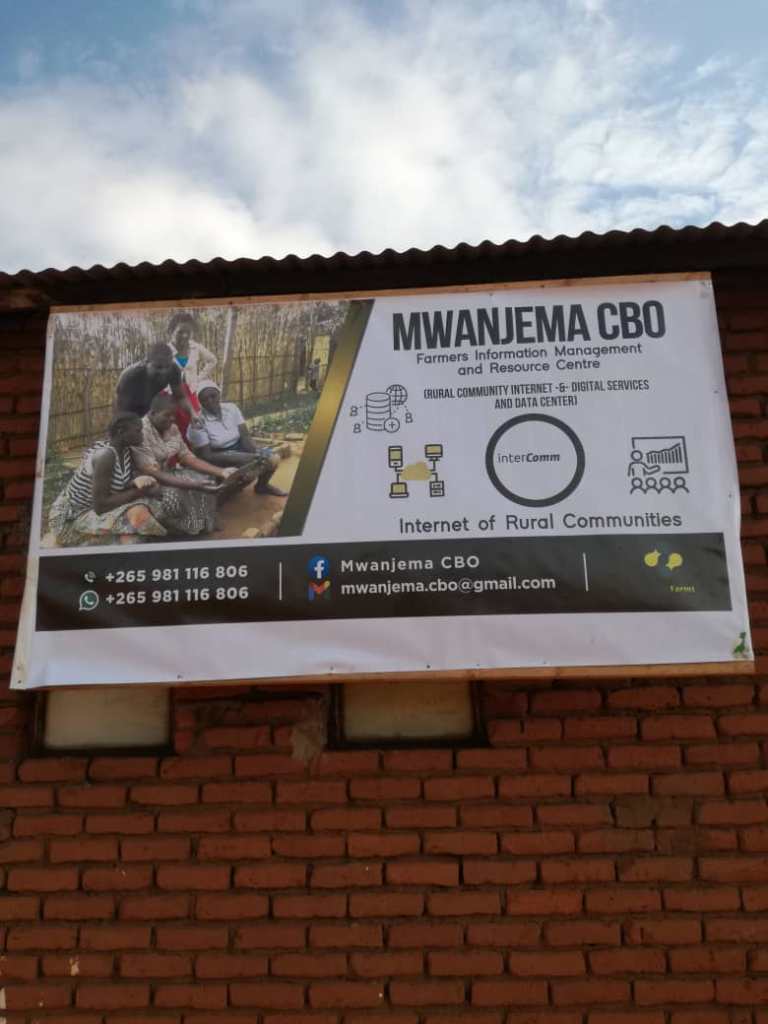
This set of platforms and cyberspace was designed to be hosted by community-based organizations (CBOs) or local “volunteers” who would perform the data collection and provision of internet and digital services to their communities. This has been extended to local social entrepreneurs.
In this move, the “volunteers” or entrepreneurs are provided with resource, technical and basic financial support. They are neither paid like normal data collectors nor not paid as “volunteers” per se.
What is supposed to power it?
The hosts ought to use the collected data to design local development foundations and as evidence of social-economic challenges to donors and NGOs in order to access funds that facilitate wide, effective and efficient operations for effective desired change and transformation of volunteerism into self-employment. That is, it offers a pathway for transforming CBOs from allowance-dependent volunteer groups to donor-funded nonprofit business organizations that offer some kind of employment for community development services.
As explained above, the platforms and cyberspace can only be viably and effectively hosted by local individuals who feel pain with their community or own peer social-economic challenges and are determined to lead a change they wish to see or to build a social impact self-employment from the scratch through some professional approach. Those who manage to see local development challenges as impact opportunities to build their career on.
It therefore becomes a compelling free consultancy service to these aspiring self-employed local change-makers or social entrepreneurs. Their local data is aggregated, organized and administered commercially to donors, development organizations and businesses for its (the platform and cyberspace) financing and sustainability.
A host (agent), either a local “volunteer” or social entrepreneur can engage multiple youths as digital facilitators and anyone as program facilitators, in form of a CBO or enterprise. It is proposed that each host or digital facilitator can monitor 25 to 50 households which form a village block. Coverage of villages will depend on availability of digital facilitators and number of blocks will depend on village size.
The process
The set of data collection platforms and cyberspace design has two major monitoring-and-evaluation phases. This includes the first phase – benchmark setting (baseline survey/evaluation) and the implementation phase. The first phase has 3 stages, the situation analysis, household baseline survey and local development [strategic action] foundation, and is expected to take place in 2 or 3 months at an operating cost range between US$300 and US$800 per block. The second phase is simply the actual monitoring and evaluation process and facilitating access to internet and digital services program until another benchmark setting takes place after 2 years or anywhere up to 10 years costing (operations) somewhere US$1000 – US$3000 per block annually.
As a set, currently there are three platforms, and more will be added. The current platforms fall under six sectors of community development. There is Chikhalidwe eco-centers (Environmental Conservation and Tourism), Umodzi Farms (Agriculture) and OmniScope (Gender Equality, Education and Social Welfare).
The current and future states
The attempt to transform this idea into reality started in April 2022 and is it expected to go commercial by end of 2023, and cover national wide and help donors, development services providers, researchers and entrepreneurs completely overhaul rural economies by 2030.
Unfortunately, the long-term benefits offered by the idea do not meet the expectations and desires of many existing (professional) local volunteers or CBO members as well development services providers. Therefore it is currently viewed unattractive and unnecessary to many professional local volunteers.
To overcome this “magnificent” challenge, a Digital eco-Agro-Dealer (DECODER) concept was added to precede engagement of CBOs. In this case, jobless youths would be engaged to foster a new breed of CBOs that go for long-term benefits whilst they build social entrepreneurship skills as alternative to their unemployment situation and simultaneously put their idle time into productive use for their own and communities’ benefit.
The first DECODER test-phase project is not only meant for testing purposes, but also to introduce and demonstrate the concept of transformation rural communities into digital villages, its possibility and necessity.
 COMP@SS
One thought on “A Little Reminder About Us: New Name, Same Mission!”